The ikigai worksheet
Find your reason to get up in the morning, in one sentence of your own. Print it, or fill it in on screen, and give it a week.

Do it on paper: the ikigai worksheet
- The three questions, with room to write
- Your four circles and a week of noticing
- A card for your sentence, to keep
You'll get it right away. We'll also write once when the Chirpi app opens. No spam, leave anytime.
What’s inside
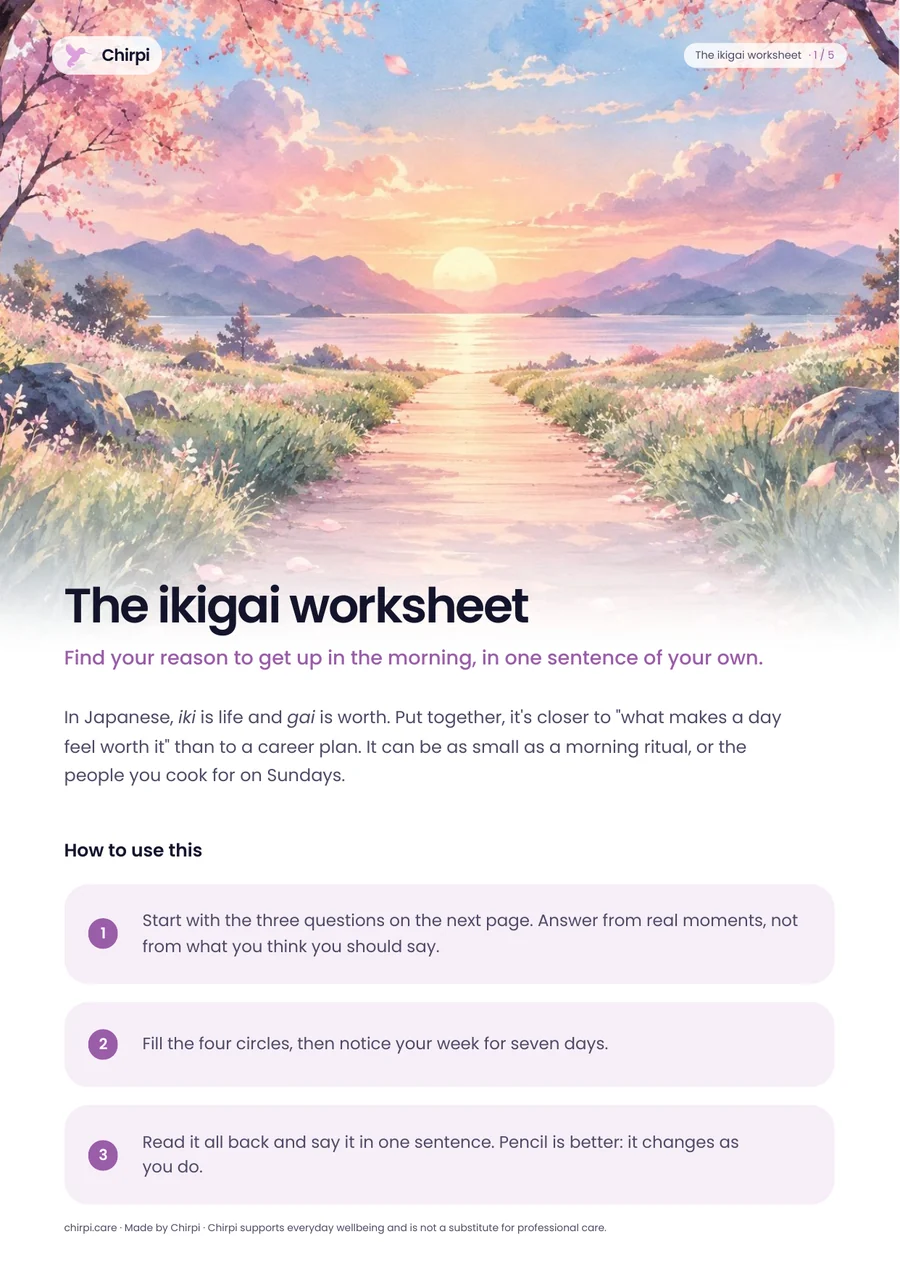
1What ikigai meansAnd how to use the worksheet, in three steps. 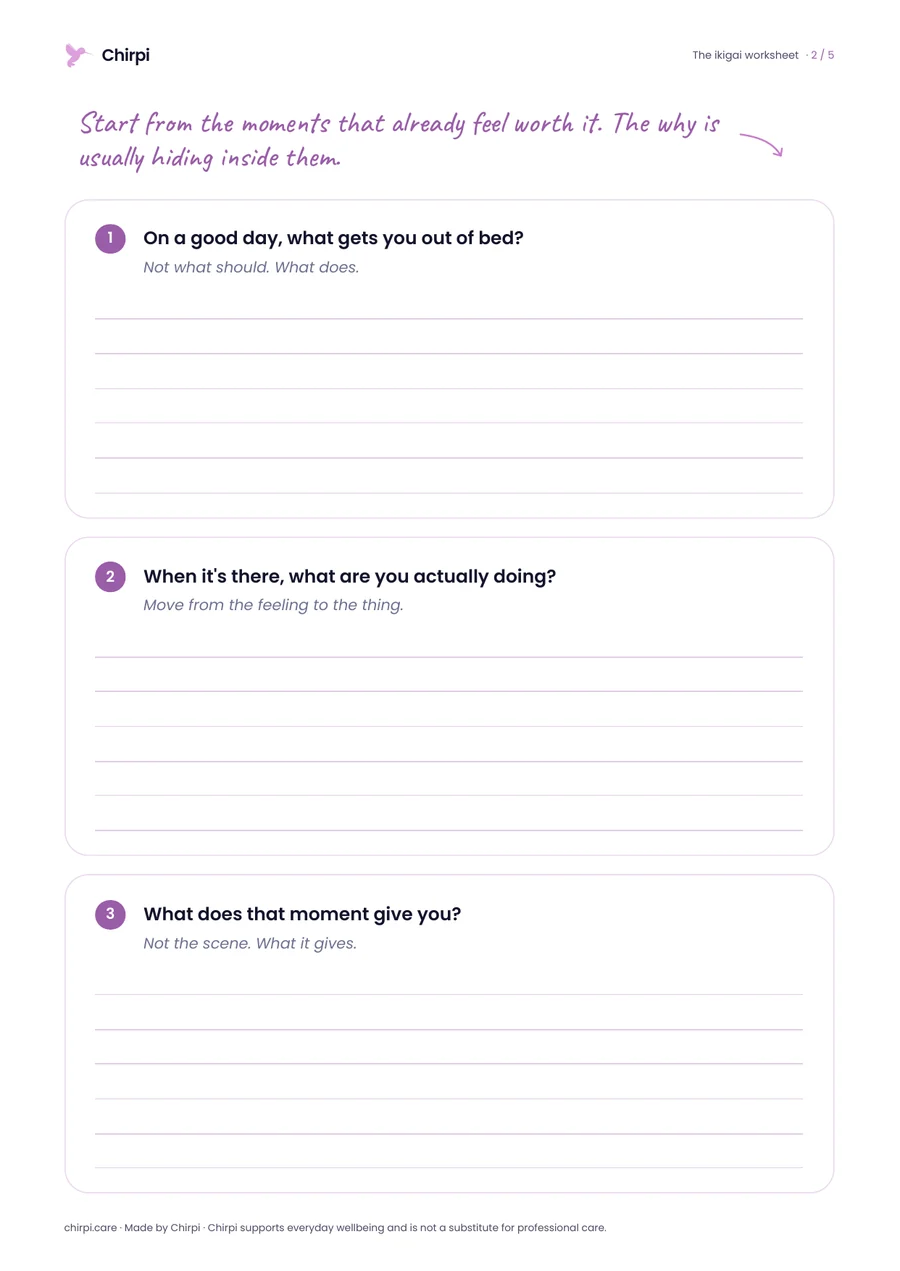
2Three honest questionsAnswered from real moments, not from what you think you should say. 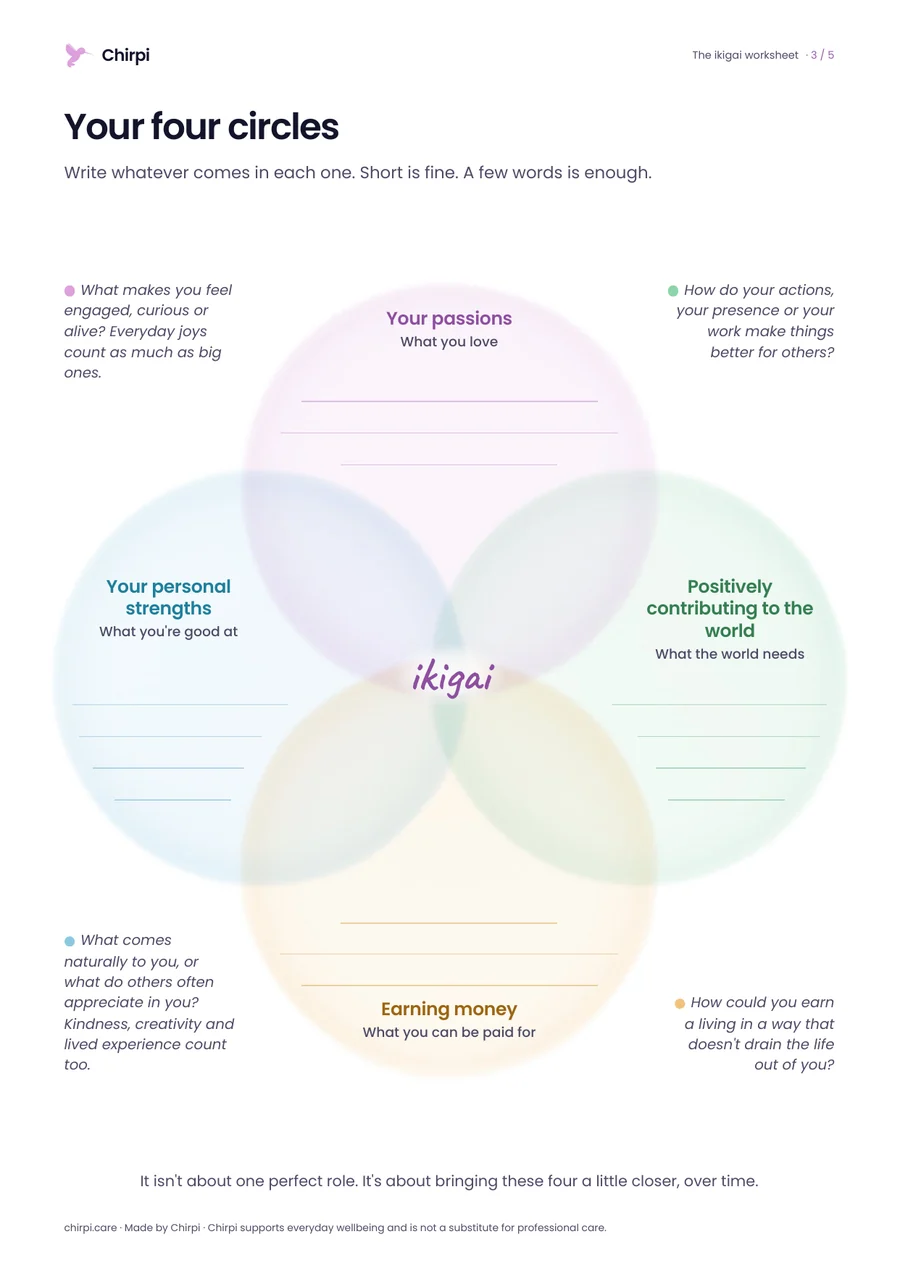
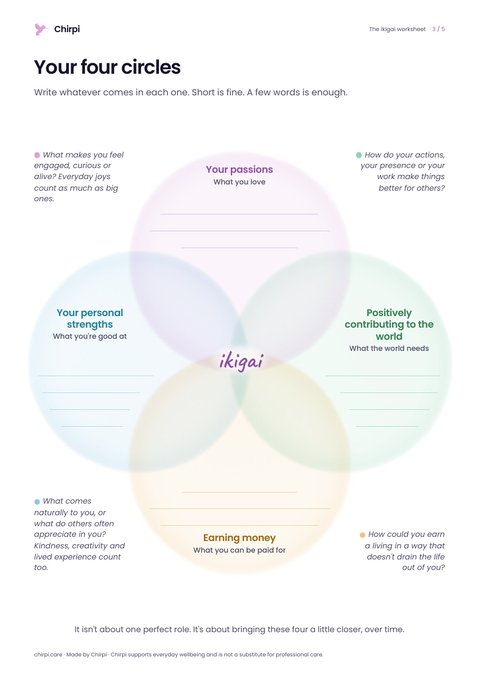
3Your four circlesWhat you love, what you’re good at, what the world needs, what you can be paid for. 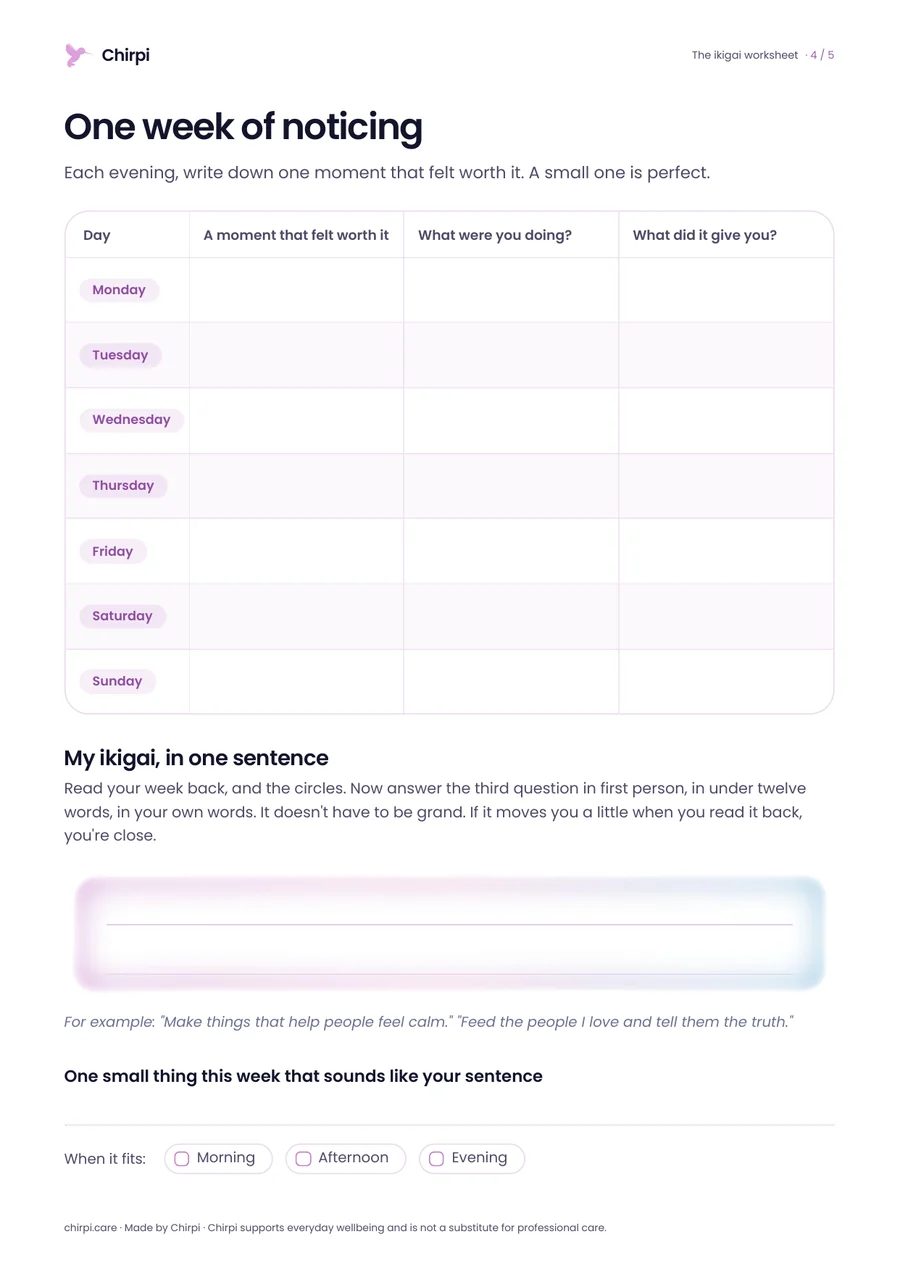
4A week of noticingOne moment each evening, then your sentence, in under twelve words. 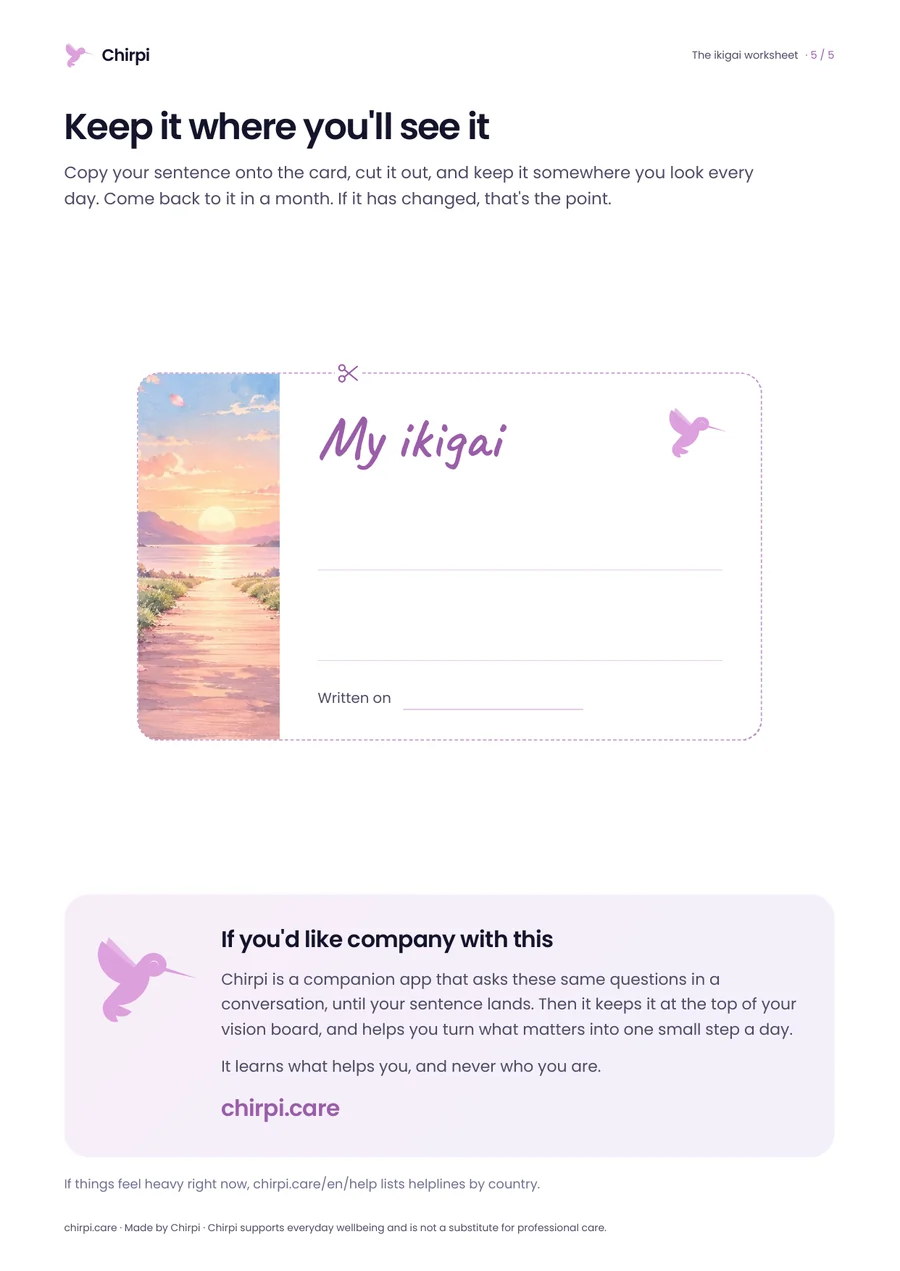
5A card to keepCut it out and keep it where you look every day.
How to use it
- 1
Start from real moments
Answer the three questions from days that already felt worth it, not from what you think you should say.
- 2
Fill the circles, then notice
A few words in each circle is enough. Then, each evening for a week, write down one moment that felt worth it.
- 3
Say it in one sentence
Read it all back and write your ikigai in under twelve words. Pencil is better: it changes as you do.
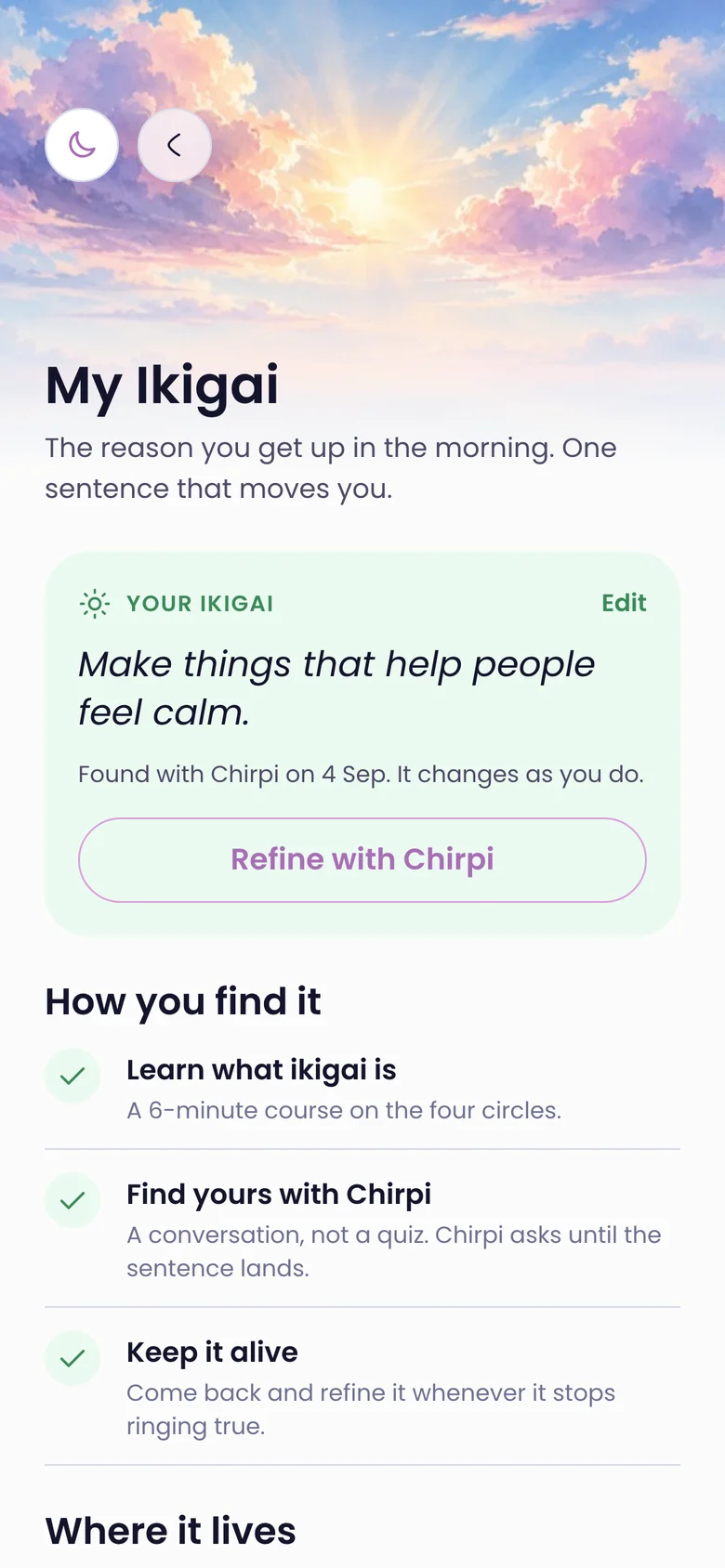
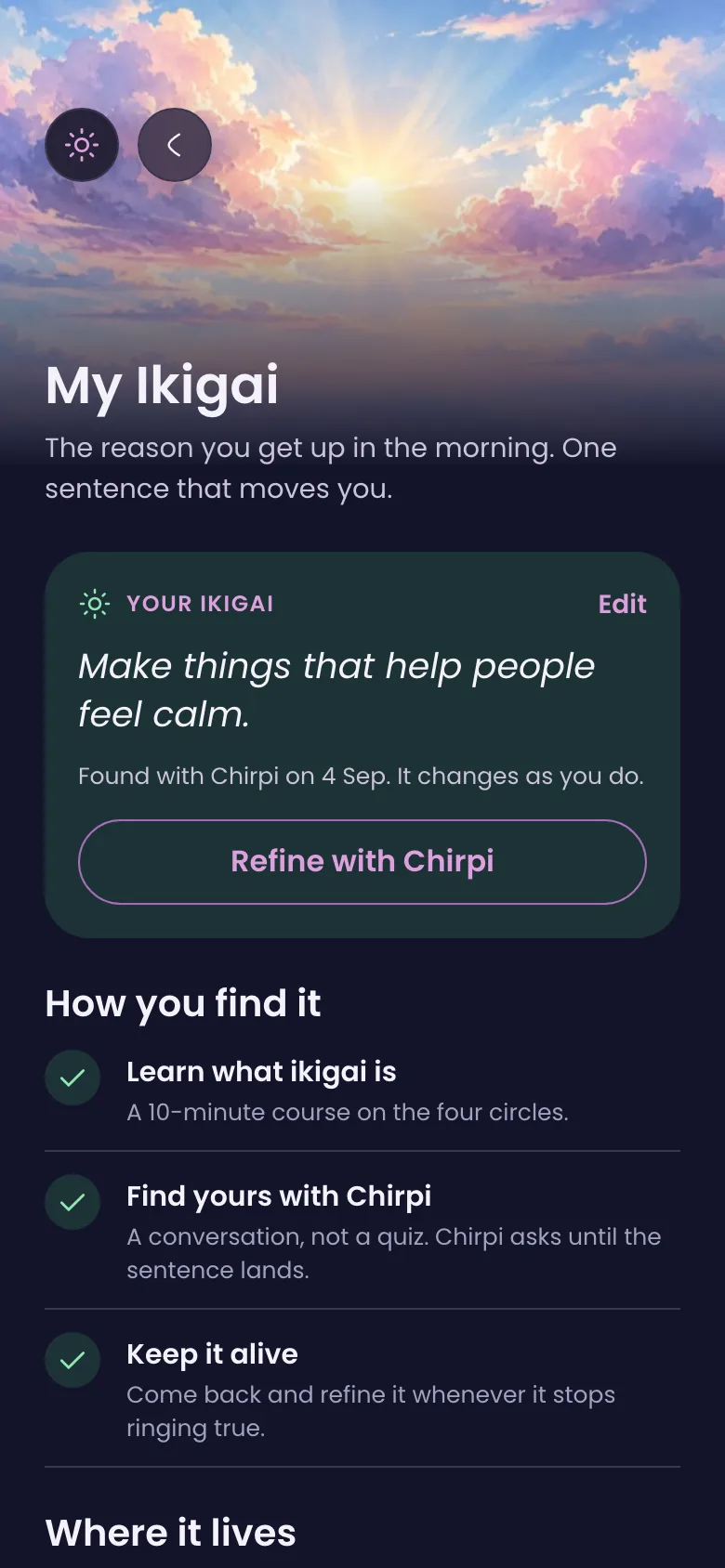
Or find it in a conversation with Chirpi.
A conversation, not a quiz: Chirpi asks until your sentence lands, then keeps it at the top of your vision board, and helps you turn what matters into one small step a day.
How the vision board worksQuestions about the worksheet
What does ikigai mean?
It’s Japanese: iki is life and gai is worth. Put together, it’s closer to what makes a day feel worth it than to a career plan, and it can be as small as a morning ritual or the people you cook for on Sundays.
Is the worksheet really free?
Yes. Leave your email and the PDF downloads right away.
Can I fill it in on screen?
Yes. Every writing space is a real form field: fill it in a PDF reader and save your copy, or print it at actual size.
How long does it take?
Answer the questions in one sitting. Then take a few minutes each evening for a week to notice what felt worth it, and write your sentence at the end.
Do I need the app to use it?
No. The worksheet works on its own. If you’d like company with it, Chirpi asks the same questions in a conversation and keeps your sentence at the top of your vision board.
From the blog

How to Make a Vision Board That Actually Works
A board of pictures alone rarely changes anything. Here is what the research says actually helps, and seven steps to a board that leads somewhere.
7 min read
How to Find Your Ikigai (Without a Quiz)
The four circles are a map, not an answer. Three honest questions about the days that already feel worth it, a week of noticing, and one sentence of your own.
8 min read
Do Vision Boards Work? What the Research Actually Says
No study has tested vision boards directly, but research on imagining the future has a lot to say about them, some of it surprising, and a fix.
6 min read